AI Email Que Es

AI Email Que Es — independent reviews, comparisons, pricing and step-by-step guides on Aizhi.

  • SWIG

    SWIG

    The Simplified Wrapper and Interface Generator (SWIG) is an open-source software tool used to connect computer programs or libraries written in C or C++ with scripting languages such as Lua, Perl, PHP, Python, R, Ruby, Tcl, and other language implementations like C#, Java, JavaScript, Go, D, OCaml, Octave, Scilab and Scheme. Output can also be in the form of XML. == Function == The aim is to allow the calling of native functions (that were written in C or C++) by other programming languages, passing complex data types to those functions, keeping memory from being inappropriately freed, inheriting object classes across languages, etc. The programmer writes an interface file containing a list of C/C++ functions to be made visible to an interpreter. SWIG will compile the interface file and generate code in regular C/C++ and the target programming language. SWIG will generate conversion code for functions with simple arguments; conversion code for complex types of arguments must be written by the programmer. The SWIG tool creates source code that provides the glue between C/C++ and the target language. Depending on the language, this glue comes in three forms: a shared library that an extant interpreter can link to as some form of extension module, or a shared library that can be linked to other programs compiled in the target language (for example, using Java Native Interface (JNI) in Java). a shared dynamic library source code that should be compiled and dynamically loaded (e.g. Node.js native extensions) SWIG is not used for calling interpreted functions by native code; this must be done by the programmer manually. == Example == SWIG wraps simple C declarations by creating an interface that closely matches the way in which the declarations would be used in a C program. For example, consider the following interface file: In this file, there are two functions sin() and strcmp(), a global variable Foo, and two constants STATUS and VERSION. When SWIG creates an extension module, these declarations are accessible as scripting language functions, variables, and constants respectively. In Python: == Purpose == There are two main reasons to embed a scripting engine in an existing C/C++ program: The program can then be customized far faster, via a scripting language instead of C/C++. The scripting engine may even be exposed to the end-user, so that they can automate common tasks by writing scripts. Even if the final product is not to contain the scripting engine, it may nevertheless be very useful for writing test scripts. There are several reasons to create dynamic libraries that can be loaded into extant interpreters, including: Provide access to a C/C++ library which has no equivalent in the scripting language. Write the whole program in the scripting language first, and after profiling, rewrite performance-critical code in C or C++. == History == SWIG is written in C and C++ and has been publicly available since February 1996. The initial author and main developer was David M. Beazley who developed SWIG while working as a graduate student at Los Alamos National Laboratory and the University of Utah and while on the faculty at the University of Chicago. Development is currently supported by an active group of volunteers led by William Fulton. SWIG has been released under a GNU General Public License. == Google Summer of Code == SWIG was a successful participant of Google Summer of Code in 2008, 2009, 2012. In 2008, SWIG got four slots. Haoyu Bai spent his summers on SWIG's Python 3.0 Backend, Jan Jezabek worked on Support for generating COM wrappers, Cheryl Foil spent her time on Comment 'Translator' for SWIG, and Maciej Drwal worked on a C backend. In 2009, SWIG again participated in Google Summer of Code. This time four students participated. Baozeng Ding worked on a Scilab module. Matevz Jekovec spent time on C++0x features. Ashish Sharma spent his summer on an Objective-C module, Miklos Vajna spent his time on PHP directors. In 2012, SWIG participated in Google Summer of Code. This time four out of five students successfully completed the project. Leif Middelschulte worked on a C target language module. Swati Sharma enhanced the Objective-C module. Neha Narang added the new module on JavaScript. Dmitry Kabak worked on source code documentation and Doxygen comments. == Alternatives == For Python, similar functionality is offered by SIP, Pybind11, and Boost's Boost.python library. == Projects using SWIG == ZXID (Apache License, Version 2.0) Symlabs SFIS (commercial) LLDB GNU Radio up to (including) version 3.8.x.x; later versions use Pybind11 Xapian TensorFlow Apache SINGA QuantLib Babeltrace

    Read more →
  • NER model

    NER model

    NER is one of several formulas for accessing live subtitles in television broadcasts and events that are produced using speech recognition. The three letters stand for number, edit error and recognition error. It has been promoted as an alternative to Word error rate (Word Error Rate) which is a more objective measure. The overall score is calculated as follows: Firstly, the number of edit and recognition errors is deducted from the total number of words in the live subtitles. This number is then divided by the total number of words in the live subtitles and finally multiplied by one hundred. N E R v a l u e = N − E − R N ∗ 100 {\displaystyle NERvalue={\frac {N-E-R}{N}}100} . The acronyms stand for the following: N (number) = total number of words in the live subtitles E (Edit error) = edit error R (Recognition error) = recognition error This measurement process has been used for public television broadcasts in European countries like Italy and Switzerland. One major drawback with NER is that it requires a human assessor to rate errors as either: 1 Minor edition or recognition errors 2 Normal edition or recognition errors 3 Serious errors which are then weighted in the assessment process. This is both subjective, time consuming and costly. Also, NER fails to account for words left out subtitles which is something that does not take account of the D/deaf audience who want verbatim subtitles. As a result, NER cannot accurately reflect the audience's experience of subtitles. Another problem is the inconsistency of human evaluation of subtitles, particularly with live subtitles, where there are differing opinions of the importance of subtitle errors. By way of contrast, Word error rate is an objective measure of subtitle errors, since it measures the textual discrepancy between the subtitles and the speech.

    Read more →
  • BeReal

    BeReal

    BeReal (stylized on the app logo as BeReal.) is a French social-networking app released in 2020, developed by Alexis Barreyat and Kévin Perreau. Currently, it is owned by Voodoo. Its main feature is a daily notification that encourages users to share photos of themselves in their day-to-day life, on any randomly selected two-minute window every day. Critics noted its emphasis on authenticity, which some felt crossed the line into the mundane. The primary reference of its name relates to its focus on users uploading unpolished photos, with it being a pun of the term B-reel. According to the app's description on Apple's App Store, BeReal encourages its users to "show their friends who they really are, for once," by removing filters and opportunities to stage or edit photos. After a couple of years of relative obscurity, it rapidly gained popularity in early and mid-2022 growing from 21.6 million to 73.5 million users between July and August, before experiencing a decrease in use in 2023 and continuing to decline to 23 million users at the beginning of 2024. == History == The app was developed by Alexis Barreyat, a former employee at GoPro, and Kévin Perreau, a graduate from 42 in Paris. Initially released in 2020, it first gained widespread popularity in early 2022. It first spread widely on college campuses, partially due to a paid ambassador program. In late August 2022, the application had over 10 million active daily users and 21.6 million active monthly users. As of February 2023, the app has grown to 13 million active daily users and 47.8 million active monthly users. In June 2021, BeReal received a $30 million funding round led by Andreessen Horowitz and Accel. In May 2022, BeReal secured $85 million in a funding round led by Yuri Milner's DST Global, increasing its valuation to about $600 million. On July 25, 2022, BeReal topped Apple's free app list in the iOS App Store, and remained until September 2022. BeReal also received Apple's iPhone App of the Year in 2022. By late spring 2023, the app's momentum was waning, as daily users dropped to about 6 million, from 15 million in October 2022. In August 2024, there was a resurgence after a campaign at the Paris Olympics 2024, with the app reportedly gaining 1000 users. In June 2024, BeReal was acquired by the French company Voodoo for a reported €500 million. Alexis Barreyat is set to step down after a transition period. == Features == Once per day, BeReal notifies all users that a two-minute window to post is open. It asks users to create a post (known eponymously as a "BeReal") which, using mandatory simultaneous photos and now short videos from both the front and back cameras, provides a visual depiction of what they are doing at that moment, with an option to caption their post. The given window varies from day to day, and is not known to users before the notification is received. Once the daily notification is sent, users lose the ability to see others' BeReals from the previous day. Furthermore, users cannot see any of the current day's BeReals until they upload their own. On-time BeReals show the time it was uploaded, meanwhile, late BeReals uploaded after the two-minute window shows how late the BeReal was taken, but the user has to long-press the BeReal to reveal the time it was uploaded. Other users can also see how many attempts the poster took to take the BeReal, as well as their location when the BeReal was taken. Users only get one chance to delete their BeReal and post another one, and they used to not be able to post more than one at any time. However, in 2023, a feature was added that allowed users to post up to two extra BeReals on days when they posted their first BeReal within the 2-minute window. In July 2024, the number of bonus BeReals was increased to 5. [1] BeReal also features a "Discovery" section, wherein users are given the option to share to a much wider, public audience. This feature, however, is limited, as users are not able to interact with the posts through commenting—unlike the "My Friends" feature. In August 2023, in an attempt to make BeReal more social, another feature was added so that users are now able to see their friends of friends' BeReal. The app reportedly uses HiveAI to automate its image moderation process. However, there is also a report function that allows users to report a photo or another user if they are posting inappropriate content. === Comparison to other platforms === Because of its daily cycle of engagement, it has been compared to Wordle, which gained popularity earlier in 2022. It also supports a platform similar to Snapchat with a theme of impermanence and brevity. BeReal has been described as designed to compete with Instagram while simultaneously de-emphasising social media addiction and overuse. The app does not allow any photo filters or other editing, and has no follower counts. Marketing material from the company said that the app "can be addictive" and that "BeReal won't make you famous." Jacob Arnott, managing director of social agency We the People, describes BeReal as "an anti-Instagram" due to its raw and unedited nature. The app's foundation on friends rather than followers resembles Facebook's platform of adding friends, which comprise the content of a user's feed. This also resembles Instagram's "close friends" story feature. Further, rather than "liking" posts, BeReal uses "RealMojis" which involves taking a photo to interact with other posts. With the popularity of BeReal, other providers have launched similar features. In July 2022, Instagram launched a "Dual Camera" feature similar to BeReal, and in August 2022 it began testing a feature called "IG Candid Challenges", where users are prompted to post once a day within two minutes. As of September 2022, TikTok has also launched a feature called TikTok Now, following the same concept. In December 2022, similar to Spotify's "Wrapped," BeReal launched a feature involving a video of a compilation of users' BeReal posts of 2022. == User characteristics == BeReal is considered to be targeted towards Generation Z users, and attempts to minimise "social media fatigue", a feeling of numbness and disconnection from reality caused by constant interaction with an idealised version of others. This is a "core generational value" that this demographic holds compared to Millennials. Further, BeReal's users have been particularly strong across universities and university-aged students, and the majority of users are in the United States, the United Kingdom, and Germany. In 2022, the majority of users were female, with 43.2% of users falling within the age range of 16 to 25 and 55.1% of users being 26 to 44 years old. BeReal, the platform encourages users to share their real time moments by sending a daily notification that gives a least two minutes to post a unedited photo using bot the front and back camera, although users can post later and retake photos from when the notification happens, this action are still visible to friends, reinforcing transparency and genuine in the moment sharing. == Reception == Jason Koebler, a writer for Vice, wrote that in contrast to Instagram, which presents an unattainable view of people's lives, BeReal instead "makes everyone look extremely boring". Niklas Myhr, a professor of social media at Chapman University, argued that depth of engagement may determine whether the app is a passing trend or has "staying power". Kelsey Weekman, a reporter for BuzzFeed News, noted that the app's unwillingness to "glamorise the banality of life" made it feel "humbling" in its emphasis on authenticity. Niloufar Haidari for The Guardian comments similarly that where the app succeeds in being "drab" in perhaps a positive way, it fails in potentially "un-inspiring" users. Likewise, Dr. Brad Ridout, a behavioral psychologist at the University of Sydney, emphasizes that the "boring" experience is what the creators are targeting for the app and, in response to Instagram's platform of flawlessness, that "perfection is the enemy of happiness". === Criticisms === Some people regularly post after the two-minute notification expires, leading to some criticism of the app, as the ability to post late undermines its aims of authenticity. In addition, BeReal's daily two-minute window has been argued to contribute to social media fatigue and a need for self-exposure, as well as constant access to phones.

    Read more →
  • Prequel (mobile application)

    Prequel (mobile application)

    Prequel, Inc. is an American technology company and mobile app developer known for developing the Prequel mobile application, which enables editing photos and videos with filters and effects generated using artificial intelligence. Prequel was founded in 2018 by Serge Aliseenko and Timur Khabirov, who currently serves as the company's CEO. It is headquartered in New York City. As of August 2022, it had been downloaded more than 100 million times. == History == In 2016, entrepreneur Timur Khabirov and investor Serge Aliseenko registered a US corporation named AIAR Labs Inc, which was developing AR solutions as an outsourced contractor. Of several proprietary products, Prequel was selected for beta-testing as a product focused on editing photos and videos. In 2018, Prequel was released on the Apple App Store. The launch cost $3 million USD, financed with the founders’ personal funds. The first release included approximately 10 filters for photos and the same amount of effects that augmented images with rose petals, rain and snow, VHS and film reel simulations, glitch, grain, sun puddles, and lomography. By June 2020, the app had also been released for Android. In 2021, Prequel founders Timur Khabirov and Serge Aliseenko launched a venture studio for startups working with artificial, computer vision, and AR-based visual art. In December 2022, Prequel reached the number 14 slot on the global rankings for Apple App Store’s Top Charts and the number 5 slot on the App Store’s U.S. charts. In March 2023, Prequel launched a new app called Artique, which is an AI-powered image editing app for businesses. Artique provides advertising and marketing graphic design using ready-made templates that users can customize, while giving suggestions and visual cues through artificial intelligence. Prequel was also one of the companies participating in discussions about artificial intelligence at SXSW 2023. == Features == Prequel describes its app as an "Aesthetic Pic Editor. The app uses artificial intelligence to create and edit content. Prequel can be used to touch up faces on images and videos and can also tie various decorative elements to certain points on the human body and face. Prequel filters include the "Cartoon" filter, which converts selfies into cartoon-style pictures. Other filters include Kidcore, Dust, Grain, Fisheye, Retro Style, Miami, Disco, and VHS-style filters, as well as the ability to create Renaissance-style pictures. Prequel also gives users the ability to apply color correction tools and to make moving images with 3D effects out of 2D images. Prequel allows users to take photos and videos directly through the app and apply filters and effects in real time. The app also comes with manual editing options for photos, such as adjusting the brightness and/or exposure and cropping photos, as well as an option to automatically apply adjustments. The Prequel app uses the Core ML, MNN, and TFLight frameworks to work with its neural networks. Some AI solutions are launched server-side, and some on the user's mobile device. A resulting photo or video edited with the app is called "a prequel." The app daily generates over 2 million such prequels, which are published by users in Instagram, TikTok, and other social media. As of 2022, the app has more than 800 filters and effects, along with video templates and support for GIFs and stickers. Prequel is free-to-use, but has a premium version that gives users access to more effects, filters, and beauty tools. Since its launch in 2018, Prequel has been downloaded more than 100 million times.

    Read more →
  • Data commingling

    Data commingling

    Data commingling, in computer science, occurs when different items or kinds of data are stored in such a way that they become commonly accessible when they are supposed to remain separated. In cloud computing, this can occur where different customer data sits on the same server. Data that is commingled can present a security vulnerability. Data commingling can also occur due to high speed data transmission mixing. In this situation, data of one security level can inadvertently or purposely be mixed with data of a lower or higher security level on the same transmission portal. Portal vehicles can be wire, fiber optics, microwave or various radio frequency transmission portals. This commingling can cause breaches of security and become a source of legal issues to any entity, corporation or individual. Data commingling can also occur when personal computers and personal software programs are used for business, security, government, etc. uses. In the early formulation stages of entities, non-profit or profit corporations, LLC's, LLP's, etc., the creation and use of stand-alone computers and stand-alone networks, "absolutely unconnected" to involved individuals, is the easiest, and safest way to prevent Data Commingling.

    Read more →
  • RIPAC (microprocessor)

    RIPAC (microprocessor)

    RIPAC was a VLSI single-chip microprocessor designed for automatic recognition of the connected speech, one of the first of this use. The project of the microprocessor RIPAC started in 1984. RIPAC was aimed to provide efficient real-time speech recognition services to the italian telephone system provided by SIP. The microprocessor was presented in September 1986 at The Hague (Netherlands) at EUSPICO conference. It was composed of 70.000 transistors and structured as Harvard architecture. The name RIPAC is the acronym for "Riconoscimento del PArlato Connesso", that means "Recognition of the connected speech" in Italian. The microprocessor was designed by the Italian companies CSELT and ELSAG and was produced by SGS: a combination of Hidden Markov Model and Dynamic Time Warping algorithms was used for processing speech signals. It was able to do real-time speech recognition of Italian and many languages with a good affordability. The chip, issued by U.S. Patent No. 4,907,278, worked at first run.

    Read more →
  • Stairstep interpolation

    Stairstep interpolation

    In the field of image processing, stairstep interpolation is a widely employed method technique for interpolating pixels after enlarging an image. The fundamental concept is to interpolate multiple times, in small increments, using any interpolation algorithm that is better than nearest-neighbor interpolation such as; bilinear interpolation, and bicubic interpolation. A common scenario is to interpolate an image by using a bicubic interpolation which increases the image size by no more than 10% (110% of the original size) at a time until the desired size is reached. Fred Miranda, a developer, popularized this method by creating and developing several Photoshop plug-ins that incorporate this technique. == Example ==

    Read more →
  • Iterative reconstruction

    Iterative reconstruction

    Iterative reconstruction refers to iterative algorithms used to reconstruct 2D and 3D images in certain imaging techniques. For example, in computed tomography an image must be reconstructed from projections of an object. Here, iterative reconstruction techniques are usually a better, but computationally more expensive alternative to the common filtered back projection (FBP) method, which directly calculates the image in a single reconstruction step. In recent research works, scientists have shown that extremely fast computations and massive parallelism is possible for iterative reconstruction, which makes iterative reconstruction practical for commercialization. == Basic concepts == The reconstruction of an image from the acquired data is an inverse problem. Often, it is not possible to exactly solve the inverse problem directly. In this case, a direct algorithm has to approximate the solution, which might cause visible reconstruction artifacts in the image. Iterative algorithms approach the correct solution using multiple iteration steps, which allows to obtain a better reconstruction at the cost of a higher computation time. There are a large variety of algorithms, but each starts with an assumed image, computes projections from the image, compares the original projection data and updates the image based upon the difference between the calculated and the actual projections. === Algebraic reconstruction === The Algebraic Reconstruction Technique (ART) was the first iterative reconstruction technique used for computed tomography by Hounsfield. === Iterative Sparse Asymptotic Minimum Variance === The iterative sparse asymptotic minimum variance algorithm is an iterative, parameter-free superresolution tomographic reconstruction method inspired by compressed sensing, with applications in synthetic-aperture radar, computed tomography scan, and magnetic resonance imaging (MRI). === Statistical reconstruction === There are typically five components to statistical iterative image reconstruction algorithms, e.g. An object model that expresses the unknown continuous-space function f ( r ) {\displaystyle f(r)} that is to be reconstructed in terms of a finite series with unknown coefficients that must be estimated from the data. A system model that relates the unknown object to the "ideal" measurements that would be recorded in the absence of measurement noise. Often this is a linear model of the form A x + ϵ {\displaystyle \mathbf {A} x+\epsilon } , where ϵ {\displaystyle \epsilon } represents the noise. A statistical model that describes how the noisy measurements vary around their ideal values. Often Gaussian noise or Poisson statistics are assumed. Because Poisson statistics are closer to reality, it is more widely used. A cost function that is to be minimized to estimate the image coefficient vector. Often this cost function includes some form of regularization. Sometimes the regularization is based on Markov random fields. An algorithm, usually iterative, for minimizing the cost function, including some initial estimate of the image and some stopping criterion for terminating the iterations. === Learned Iterative Reconstruction === In learned iterative reconstruction, the updating algorithm is learned from training data using techniques from machine learning such as convolutional neural networks, while still incorporating the image formation model. This typically gives faster and higher quality reconstructions and has been applied to CT and MRI reconstruction. == Advantages == The advantages of the iterative approach include improved insensitivity to noise and capability of reconstructing an optimal image in the case of incomplete data. The method has been applied in emission tomography modalities like SPECT and PET, where there is significant attenuation along ray paths and noise statistics are relatively poor. Statistical, likelihood-based approaches: Statistical, likelihood-based iterative expectation-maximization algorithms are now the preferred method of reconstruction. Such algorithms compute estimates of the likely distribution of annihilation events that led to the measured data, based on statistical principle, often providing better noise profiles and resistance to the streak artifacts common with FBP. Since the density of radioactive tracer is a function in a function space, therefore of extremely high-dimensions, methods which regularize the maximum-likelihood solution turning it towards penalized or maximum a-posteriori methods can have significant advantages for low counts. Examples such as Ulf Grenander's Sieve estimator or Bayes penalty methods, or via I.J. Good's roughness method may yield superior performance to expectation-maximization-based methods which involve a Poisson likelihood function only. As another example, it is considered superior when one does not have a large set of projections available, when the projections are not distributed uniformly in angle, or when the projections are sparse or missing at certain orientations. These scenarios may occur in intraoperative CT, in cardiac CT, or when metal artifacts require the exclusion of some portions of the projection data. In Magnetic Resonance Imaging it can be used to reconstruct images from data acquired with multiple receive coils and with sampling patterns different from the conventional Cartesian grid and allows the use of improved regularization techniques (e.g. total variation) or an extended modeling of physical processes to improve the reconstruction. For example, with iterative algorithms it is possible to reconstruct images from data acquired in a very short time as required for real-time MRI (rt-MRI). In Cryo Electron Tomography, where the limited number of projections are acquired due to the hardware limitations and to avoid the biological specimen damage, it can be used along with compressive sensing techniques or regularization functions (e.g. Huber function) to improve the reconstruction for better interpretation. Here is an example that illustrates the benefits of iterative image reconstruction for cardiac MRI.

    Read more →
  • Automated restaurant

    Automated restaurant

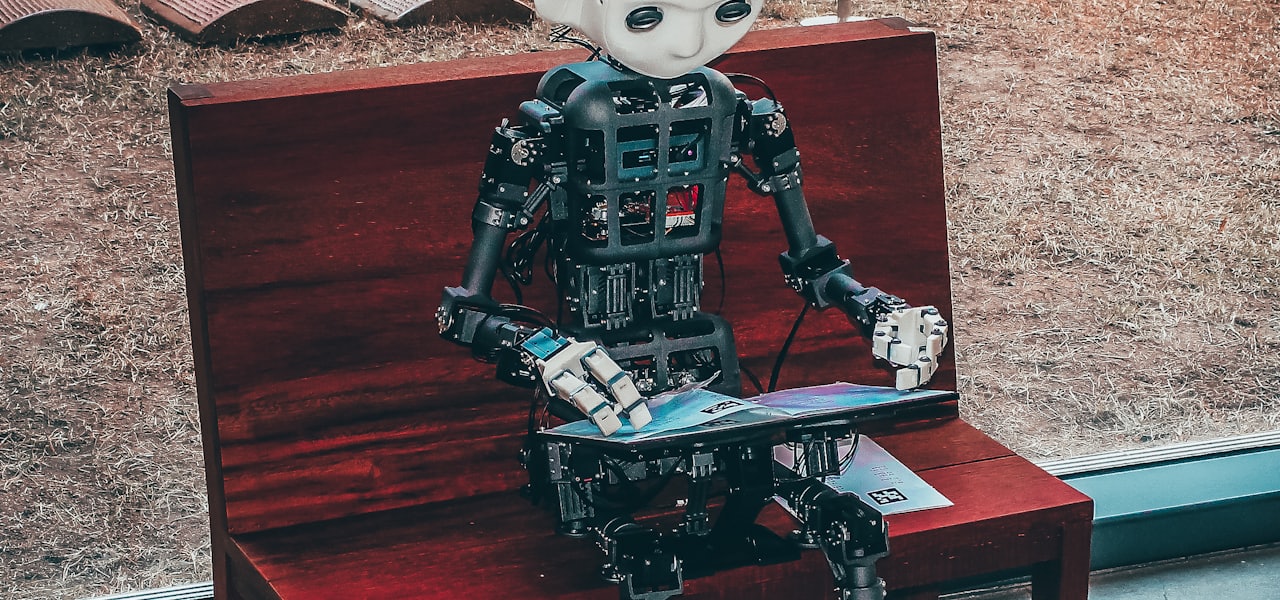
    An automated restaurant or robotic restaurant is a restaurant that uses robots to do tasks such as delivering food and drink to the tables or cooking the food. Restaurant automation means the use of a restaurant management system to automate some or occasionally all of the major operations of a restaurant establishment. More recently, restaurants are opening that have completely or partially automated their services. These may include: taking orders, preparing food, serving, and billing. A few fully automated restaurants operate without any human intervention whatsoever. Robots are designed to help and sometimes replace human labour (such as waiters and chefs). The automation of restaurants may also allow for the option for greater customization of an order. == History == === Vending machines === In the late 19th and early 20th century a number of restaurants served food solely through vending machines. These restaurants were called automats or, in Japan, shokkenki. Customers ordered their food directly through the machines. === Sushi conveyors === Yoshiaki Shiraishi is a Japanese innovator who is known for the creation of conveyor belt sushi. He had the idea following difficulty staffing his small sushi restaurant and managing the restaurant on his own. He was inspired seeing beer bottles on a conveyor belt in an Asahi brewery. Yoshiaki's restaurants are an early example of restaurant automation; they used a conveyor belt to distribute dishes around the restaurant, eliminating the need for waiters. This example of automation dates back to the Japanese economic miracle; the first of Yoshiaki's conveyor belt sushi restaurants was opened under the name Mawaru Genroku Sushi in 1958, in Osaka. === Partial automation === As of 2011, across Europe, McDonald's had already begun implementing 7,000 touch screen kiosks that could handle cashiering duties. From 2015 to 2020, Zume had an automated pizza parlor. Later companies would try to produce smaller, less ambitious devices, with one robotics company producing a machine that could automate the slowest and most repetitive parts of assembling a pizza, such as spreading pizza sauce or placing slices of pepperoni, while leaving other customizations to employees. In 2020, a restaurant in the Netherlands began trialling the use of a robot to serve guests. In September 2021, Karakuri's 'Semblr' food service robot served personalised lunches for the 4,000 employees of grocery technology solutions provider ocado Group's head offices in Hatfield, UK. 2,700 different combinations of dishes were on offer. Customers could specify in grams what hot and cold items, proteins, sauces and fresh toppings they wanted. In 2021, Columbia University School of Engineering and Applied Science engineers developed a method of cooking 3D printed chicken with software-controlled robotic lasers. The “Digital Food” team exposed raw 3D printed chicken structures to both blue and infrared light. They then assessed the cooking depth, colour development, moisture retention and flavour differences of the laser-cooked 3D printed samples in comparison to stove-cooked meat. In June 2022 a California nonprofit chain of residential communities, Front Porch, experimented with robots in dining rooms at two locations to supplement wait staff by carrying plated food and drink to tables, and removing dishes. 65% of residents found the robots helpful, with 51% saying they let the staff spend more quality time with diners. 51% of staff were "excited" and 58% said they enabled more quality time with diners. The chain has 19 senior living communities (and 35 affordable housing communities), so it has potential to expand robots to more dining rooms. It is shifting to memory care, which may affect plans. == Rationales == === Advantages === Efficiency: Automated restaurants can significantly enhance operational efficiency by minimizing human error and reducing service time. With automated ordering, payment, and food preparation systems, customers can enjoy faster service and reduced waiting times. Cost savings: By reducing the need for human staff, automated restaurants can potentially lower labor costs. This can be particularly beneficial in areas with high labor expenses, as it allows for better resource allocation and cost management. Consistency: Automation ensures consistency in food quality and presentation. With precise portion control and standardized cooking methods, customers can expect the same quality and taste in their meals every time they visit. Enhanced customer experience: Self-service kiosks and automated systems provide customers with control and convenience. They can customize their orders, browse through menu options, and pay seamlessly, creating a more interactive and satisfying dining experience. === Disadvantages === Lack of personal touch: Automated restaurants may lack the personal interaction and warmth that traditional restaurants provide. Some customers prefer the human touch, personalized recommendations, and the social aspect of dining out. Technical issues: Reliance on technology means that technical glitches and malfunctions can occur, resulting in service disruptions or delays. Maintenance and technical support become critical in ensuring smooth operations. Limited menu complexity: The automation process may be better suited for standardized menu items rather than complex or customized dishes. The ability to cater to unique dietary preferences or accommodate special requests may be limited. Employment implications: Automated restaurants may result in job losses for traditional restaurant staff, potentially impacting the local workforce. It is important to consider the social and economic implications of adopting such technology. == Locations == Automated restaurants have been opening in many countries. Examples include: Nala Restaurant in Naperville, Illinois Fritz's Railroad Restaurant in Kansas City, Kansas Výtopna, a Railway Restaurant using model trains: franchise of various restaurants and coffeehouses in the Czech Republic Bagger's Restaurant in Nuremberg, Germany FuA-Men Restaurant, a ramen restaurant located in Nagoya, Japan Fōster Nutrition in Buenos Aires, Argentina Dalu Robot Restaurant in Jinan, China Haohai Robot Restaurant in Harbin, China Robot Kitchen Restaurant in Hong Kong Robo-Chef restaurant in Tehran, Iran, started in 2017, is the first robotic and "waiterless" restaurant of the Middle East. MIT graduates opened Spyce Kitchens in downtown Boston, Massachusetts, in 2018 Foodom, under Country Garden Holdings, opened January 12, 2020, in Guangzhou, China Robot Chacha, the first robot restaurant of India, is planning to open in the capital city of New Delhi. Kura Revolving Sushi Bar, with a number of locations in the United States, uses a tablets at tables for ordering, a conveyor belt to deliver food, and robots to deliver drinks and condiments. Chipotle Mexican Grill is beginning to deploy the Hyphen Makeline, which assembles up to 350 bowls and salads automatically per hour, and Chippy, an automatic tortilla chip fryer made by Miso Robotics. Serious Dumplings in Boca Raton, Florida

    Read more →
  • Harmony (software)

    Harmony (software)

    Harmony is a Java-based software for creating high-definition music videos with 2D and 3D animations. The application was developed by Digital Chaotics, a company based in San Jose, California and established in 2010 by Ken and Leanna Scott. == History == During a March 1, 2011 interview published by The LIST magazine, Ken explained how he initially got into music and digital entertainment. According to Scott: “I came at it from both the art and the technology side. … I built one of the first digital audio synthesizers as an undergrad project back in 1979. It was a short jump from there to creating visuals with computers, too.” Taking inspiration from Fantasia – which Scott calls, “The greatest music video of all time” – he began writing software code for Harmony in late 2009, finishing the project in mid-2010. However, Scott has also said that the idea for Harmony began much earlier: I read a book in 1978 called Digital Harmony, by John H Whitney, Sr. (Interestingly, he was the father of the president of Digital Productions.) He said that there was a kind of visual art based on motion, and proposed theories about the underlying mathematical structure of visual harmony. So there's the book, combined with my desire to create art with computers-add a taste or two of things commonly used by college students during the 70's - and lots of Pink Floyd. Add it all up, and the seeds for Harmony were planted. My friends in school and at Floating Point Systems listened to me ranting about "making music videos with computers" incessantly. I'm sure it was both maddening and fascinating to see. == Features == Harmony runs on Windows 7 and Windows Vista. Currently, Digital Chaotics does not offer a macOS or Linux platform for the software. However, Harmony can be run on these platforms by running it on Windows in a virtual machine. == Harmony 2 == On November 1, 2011, Digital Chaotics released the 2.0 version of the Harmony software. Unlike the original version, the second release featured three product levels: Harmony 2 Express, Harmony 2 Pro, and Harmony 2 Extreme. The "Express" version was positioned as an entry-level, free release to allow users a chance to "test-drive" the software. The "Pro" version currently retails at $197, while the "Extreme" is priced at $397. These two versions, aimed more towards VJ and Fulldome theater usage, featured additional software capability and features such as higher resolution, more video formatting options, and more camera angles.

    Read more →
  • Beauty.AI

    Beauty.AI

    Beauty.AI is a mobile beauty pageant for humans and a contest for programmers developing algorithms for evaluating human appearance. The mobile app and website created by Youth Laboratories that uses artificial intelligence technology to evaluate people's external appearance through certain algorithms, such as symmetry, facial blemishes, wrinkles, estimated age and age appearance, and comparisons to actors and models. The Beauty.AI 2.0 contest caused great concern over important ethical issues with deep neural networks such as age, race and gender bias and lead to the creation of the Diversity.AI think tank dedicated to developing new methods for uncovering and managing bias in artificially intelligent systems. Beauty.AI was also an attempt to find approaches on how machines can perceive human face through evaluating particular features, commonly associated with health and beauty. == Concept == The Beauty.AI app was created by Youth Laboratories, a company based out of Russia and Hong Kong that focuses on facial skin analytics. The bioinformation company Insilico Medicine assists in the Beauty.AI app by testing its deep learning techniques to the app. One goal of the app is to reduce the need for human and animal testing as well as improving people's overall health. Its first contest was started in December 2016, and the results were announced in August 2016. More than 60,000 people submitted entries into the contest. The mobile app uses artificial intelligence technology to inspect photographs for certain facial features in order to both determine a person's beauty through artificial means by multiple robots. Part of the Beauty.AI app's purpose is to collect visual and anecdotal data to improve its creator's Youth Laboratories skin analyst skills. == Accusations of racism == There were a total of 44 individuals from different age groups and genders judged as the most attractive, with 37 white entrants, six Asian entrants, and one dark-skinned entrant. The app has received criticism from social justice advocates and computer science professionals. However, Alex Zhavoronkov, PhD, chief science officer of Youth Laboratories and chief technology officer Konstantin Kiselev, both for Youth Laboratories, noted that a lack of data may have contributed to these results. Also, Kiselev added that another issue was that approximately 75% of entrants were white Europeans, whereas only 7% and 1% were from India and Africa, respectively. Kiselev stated that they would work on doing more and better outreach to these areas to improve in this area. Despite this, it was said by Dr. Zhavoronkov that the AI would discard photos of dark-skinned people if the lighting is too poor. Dr. Zhavoronkov vowed to weed out the issues for the next beauty pageant and to try to avoid a similar controversy in the future.

    Read more →
  • Level-set method

    Level-set method

    The Level-set method (LSM) is a conceptual framework for using level sets as a tool for numerical analysis of surfaces and shapes. LSM can perform numerical computations involving curves and surfaces on a fixed Cartesian grid without having to parameterize these objects. LSM makes it easier to perform computations on shapes with sharp corners and shapes that change topology (such as by splitting in two or developing holes). These characteristics make LSM effective for modeling objects that vary in time, such as an airbag inflating or a drop of oil floating in water. == Overview == The figure on the right illustrates several ideas about LSM. In the upper left corner is a bounded region with a well-behaved boundary. Below it, the red surface is the graph of a level set function φ {\displaystyle \varphi } determining this shape, and the flat blue region represents the X-Y plane. The boundary of the shape is then the zero-level set of φ {\displaystyle \varphi } , while the shape itself is the set of points in the plane for which φ {\displaystyle \varphi } is positive (interior of the shape) or zero (at the boundary). In the top row, the shape's topology changes as it is split in two. It is challenging to describe this transformation numerically by parameterizing the boundary of the shape and following its evolution. An algorithm can be used to detect the moment the shape splits in two and then construct parameterizations for the two newly obtained curves. On the bottom row, however, the plane at which the level set function is sampled is translated upwards, on which the shape's change in topology is described. It is less challenging to work with a shape through its level-set function rather than with itself directly, in which a method would need to consider all the possible deformations the shape might undergo. Thus, in two dimensions, the level-set method amounts to representing a closed curve Γ {\displaystyle \Gamma } (such as the shape boundary in our example) using an auxiliary function φ {\displaystyle \varphi } , called the level-set function. The curve Γ {\displaystyle \Gamma } is represented as the zero-level set of φ {\displaystyle \varphi } by Γ = { ( x , y ) ∣ φ ( x , y ) = 0 } , {\displaystyle \Gamma =\{(x,y)\mid \varphi (x,y)=0\},} and the level-set method manipulates Γ {\displaystyle \Gamma } implicitly through the function φ {\displaystyle \varphi } . This function φ {\displaystyle \varphi } is assumed to take positive values inside the region delimited by the curve Γ {\displaystyle \Gamma } and negative values outside. == The level-set equation == If the curve Γ {\displaystyle \Gamma } moves in the normal direction with a speed v {\displaystyle v} , then by chain rule and implicit differentiation, it can be determined that the level-set function φ {\displaystyle \varphi } satisfies the level-set equation ∂ φ ∂ t = v | ∇ φ | . {\displaystyle {\frac {\partial \varphi }{\partial t}}=v|\nabla \varphi |.} Here, | ⋅ | {\displaystyle |\cdot |} is the Euclidean norm (denoted customarily by single bars in partial differential equations), and t {\displaystyle t} is time. This is a partial differential equation, in particular a Hamilton–Jacobi equation, and can be solved numerically, for example, by using finite differences on a Cartesian grid. However, the numerical solution of the level set equation may require advanced techniques. Simple finite difference methods fail quickly. Upwinding methods such as the Godunov method are considered better; however, the level set method does not guarantee preservation of the volume and shape of the set level in an advection field that maintains shape and size, for example, a uniform or rotational velocity field. Instead, the shape of the level set may become distorted, and the level set may disappear over a few time steps. Therefore, high-order finite difference schemes, such as high-order essentially non-oscillatory (ENO) schemes, are often required, and even then, the feasibility of long-term simulations is questionable. More advanced methods have been developed to overcome this; for example, combinations of the leveling method with tracking marker particles suggested by the velocity field. == Example == Consider a unit circle in R 2 {\textstyle \mathbb {R} ^{2}} , shrinking in on itself at a constant rate, i.e. each point on the boundary of the circle moves along its inwards pointing normally at some fixed speed. The circle will shrink and eventually collapse down to a point. If an initial distance field is constructed (i.e. a function whose value is the signed Euclidean distance to the boundary, positive interior, negative exterior) on the initial circle, the normalized gradient of this field will be the circle normal. If the field has a constant value subtracted from it in time, the zero level (which was the initial boundary) of the new fields will also be circular and will similarly collapse to a point. This is due to this being effectively the temporal integration of the Eikonal equation with a fixed front velocity. == Applications == In mathematical modeling of combustion, LSM is used to describe the instantaneous flame surface, known as the G equation. Level-set data structures have been developed to facilitate the use of the level-set method in computer applications. Computational fluid dynamics Trajectory planning Optimization Image processing Computational biophysics Discrete complex dynamics (visualization of the parameter plane and the dynamic plane) == History == The level-set method was developed in 1979 by Alain Dervieux, and subsequently popularized by Stanley Osher and James Sethian. It has since become popular in many disciplines, such as image processing, computer graphics, computational geometry, optimization, computational fluid dynamics, and computational biology.

    Read more →
  • System Service Descriptor Table

    System Service Descriptor Table

    The System Service Descriptor Table (SSDT) is an internal dispatch table within Microsoft Windows. == Function == The SSDT maps syscalls to kernel function addresses. When a syscall is issued by a user space application, it contains the service index as parameter to indicate which syscall is called. The SSDT is then used to resolve the address of the corresponding function within ntoskrnl.exe. In modern Windows kernels, two SSDTs are used: One for generic routines (KeServiceDescriptorTable) and a second (KeServiceDescriptorTableShadow) for graphical routines. A parameter passed by the calling userspace application determines which SSDT shall be used. == Hooking == Modification of the SSDT allows to redirect syscalls to routines outside the kernel. These routines can be either used to hide the presence of software or to act as a backdoor to allow attackers permanent code execution with kernel privileges. For both reasons, hooking SSDT calls is often used as a technique in both Windows kernel mode rootkits and antivirus software. In 2010, many computer security products which relied on hooking SSDT calls were shown to be vulnerable to exploits using race conditions to attack the products' security checks.

    Read more →
  • Aarogya Setu

    Aarogya Setu

    Aarogya Setu (lit. 'The bridge to health') is an Indian COVID-19 "contact tracing, syndromic mapping and self-assessment" digital service, primarily a mobile app, developed by the National Informatics Centre under the Ministry of Electronics and Information Technology (MeitY). The app reached more than 100 million installs in 40 days. On 26 May, amid growing privacy and security concerns, the source code of the app was made public. == Full view == The stated purpose of this app is to spread awareness of COVID-19 and to connect essential COVID-19-related health services to the people of India. This app augments the initiatives of the Department of Health to contain COVID-19 and shares best practices and advisories. It is a tracking app which uses the smartphone's GPS and Bluetooth features to track COVID-19 cases. The app is available for Android and iOS mobile operating systems. With Bluetooth, it tries to determine the risk if one has been near (within six feet of) a COVID-19-infected person, by scanning through a database of known cases across India. Using location information, it determines whether the location one is in belongs to one of the infected areas based on the data available. This app is an updated version of an earlier app called Corona Kavach (now discontinued) which was released earlier by the Government of India. == Features and tools == Aarogya Setu has four sections: User Status (tells the risk of getting COVID-19 for the user) Self Assess (helps the users identify COVID-19 symptoms and their risk profile) COVID-19 Updates (gives updates on local and national COVID-19 cases) E-pass integration (if applied for E-pass, it will be available) See Recent Contacts option (allows the users to assess the risk level of their Bluetooth contacts) It tells how many COVID-19 positive cases are likely in a radius of 500 m, 1 km, 2 km, 5 km and 10 km from the user. The app is built on a platform that can provide an application programming interface (API) so that other computer programs, mobile applications, and web services can make use of the features and data available in Aarogya Setu. == Response == Aarogya Setu crossed five million downloads within three days of its launch, making it one of the most popular government apps in India. It became the world's fastest-growing mobile app, beating Pokémon Go, with more than 50 million installs 13 days after launching in India on 2 April 2020. It reached 100 million installs by 13 May 2020, that is in 40 days since its launch. In an order on 29 April 2020 the central government made it mandatory for all employees to download the app and use it – "Before starting for office, they must review their status on Aarogya Setu and commute only when the app shows safe or low risk". The Union Home Ministry also said that the application is mandatory for all living in the COVID-19 containment zone. The government gave the announcement along with the nationwide lockdown extension by two weeks from the 4 May with certain relaxations. On 21 May 2020, the Airport Authority of India issued a Standard Operating Procedure (SOP) stating that all departing passengers must compulsorily be registered with the Aarogya Setu app. It added that the app would not be mandatory for children below 14 years. However, the next day, Civil Aviation Minister Hardeep Singh Puri clarified that the app would not be mandatory for any passengers. On 26 May 2020, the Aarogya Setu app code was made open to developers across the globe to help other countries manage contact tracing in their fight against COVID-19 pandemic. In March 2021, Co-WIN portal was integrated with the app. This allowed users to schedule an appointment through the app for COVID-19 vaccine by registering their phone number and providing relevant documents. == Effectiveness == NITI Aayog CEO revealed that "the app has been able to identify more than 3,000 hotspots in 3–17 days ahead of time." However, users and experts in India and around the world say the app raises huge data security concerns. The app collects name, number, gender, travel history, and uses a phone's Bluetooth and location data to let users know if they have been near a person with COVID-19 by scanning a database of known cases of infection, and also share it with the government simultaneously. This is the major area of concern as the app's constant access to a phone's Bluetooth imposes a form of security threat. But it stood to clarify itself that the informations received are not going to be made public. Amidst all these, the app hits a record of about one-hundred million downloads. == Reception == Rahul Gandhi, leader of the Congress party, termed the Aarogya Setu application a "sophisticated surveillance system" after the government announced that downloading the app would be mandatory for both government and private employees. Following this, others raised the same concerns about the Aarogya Setu app. The Ministry of Electronics and Information Technology (MeitY) responded to these concerns by asserting that Gandhi's claims were false, and that the app was being appreciated internationally. On 5 May, French ethical hacker Robert Baptiste, who goes by the name Elliot Alderson on Twitter, claimed that there were security issues with the app. The Indian government, as well as the app developers, responded to this claim by thanking the hacker for his attention, but dismissed his concerns. The developers of the app stated that the fetching of location data is a documented feature of the app, rather than a flaw, since the app is designed to track the distribution of the virus-infected population. They also asserted that no personal information of any user has been proven to be at risk. On 6 May, Robert Baptiste tweeted that security vulnerabilities in Aarogya Setu allowed hackers to "know who is infected, unwell, [or] made a self assessment in the area of his choice". He also gave details of how many people were unwell and infected at the Prime Minister's Office, the Indian Parliament and the Home Office. The Economic Times pointed out that a clause in the app's Terms and Conditions stated that the user "agrees and acknowledges that the Government of India will not be liable for ... any unauthorised access to your information or modification thereof". In response, several software developers called for the source code to be made public. On 12 May, former Supreme Court Judge Justice B.N. Srikrishna termed the government's push mandating the use of Aarogya Setu app "utterly illegal". He said so far it is not backed by any law and questioned "under what law, government is mandating it on anyone". MIT Technology Review gave 2 out of 5 stars to Aarogya Setu app after analyzing the COVID contact tracing apps launched in 25 countries. The app got stars only for the policy which suggests that data collected is deleted after a period of time and that the data collection, as far as user inputs go, is minimal. It also highlighted that India is the only democracy making its app mandatory for millions of people. The rating was further downgraded from 2 to 1 for collecting more information than the app needs to function. Following this, the MeitY made the source code of the Android app public on GitHub on 26 May, which will be followed by iOS and API documentation. Further, the Government has also launched a "bug bounty program". This was done to "promote transparency and ensure security and integrity of the app". However, experts stated that the server-side code had not yet been publicly released, which meant that public opinion on security and privacy was yet to be completely assuaged. Following this, ZDNet noted that the source code seemed to confirm the government's claim that user location data, if collected, would be anonymised and would be deleted after 45 days, or 60 days for high-risk individuals.

    Read more →
  • 17LIVE

    17LIVE

    17LIVE is an international entertainment platform. As of 2024, 17LIVE is the #3 live broadcasting platform globally, formed by its flagship live stream app 17LIVE (LIVIT in English markets), MEME Live and live stream e-commerce platforms HandsUP and OrderPally. == History == 17LIVE was first founded in Taiwan in 2015 by Jeffery Huang. The company has maintained its leading position since its entry into the Japan market in 2017, becoming the biggest platform for live entertainment in Japan, Taiwan, Hong Kong, and other countries. In 2017, 17 closed out US$33M in series B round to merge with dating software Paktor, with Joseph Phua (Co-founder of Paktor) taking over the leadership of 17LIVE as CEO and Co-founder, as well as to enter the Japan and Hong Kong market. Within one year, 17 Media became the #1 market leader in Japan. In 2018, the company raised $25M in series C round as it got ready for US IPO, which failed to materialize. 17LIVE had an unsuccessful US IPO attempt in 2018. Since then, the company reformed and transformed the business. Some key initiatives include the hiring of current CEO Hirofumi Ono, spin-off of Paktor (dating software business unit), full buy-out of founder Jeffery Huang, acquisition of MEME and HandsUp, and more. Despite the failed IPO attempt, the company continued to push for international expansion, including creating ‘LIVIT’ for the English-speaking markets to enter US, India, and North Africa. In 2019, 17's flagship live streaming app reached 10M downloads in Japan, and the business continues to push for both organic and inorganic expansion. Some key M&A highlights in the year include the acquisition of MEME Live in Southeast Asia, as well as HandsUp, a live e-commerce platform. In 2020, M17 closed out $26.5M in Series D round to continue organic growth in Japan, US and Middle East. In the same year, the company also sold its dating app business, Parktor, to rationalise M17 into a live-stream pure play business, followed by the appointment of its current Chairman, Joseph Phua, and previous Global CEO, Hirofumi Ono. With the buy-out and departure of founder Jeff Huang, the parent holding company M17 Entertainment Limited was officially renamed as 17 LIVE Group. An estimated 60 million users registered in 154 countries and territories in April 2022. In 2022, September, 17LIVE announced Group CEO Hirofumi Ono steps down. Alex Lien takes over the leadership as new Group COO; Jing Shen Ng appointed Group CTO. In 2023, March, 17LIVE announced Alex Lien promoted to Global CEO. Kenta Masuda appointed as Global CFO. === Collaboration with Ayumi Hamasaki === To celebrate its 4th anniversary, 17LIVE collaborated with Japanese singer-songwriter Ayumi Hamasaki, who led the 17LIVE 4th Anniversary meets Ayumi Hamasaki series starting October 18, 2021. Along with composer and arranger Yuta Nakano, Hamasaki judged auditioning artists competing for the chance to work with her and her production team for a debut single. The series was streamed live on the 17LIVE website, the final airing on November 11. The eventual winner was named as Yoshitaka_song. When asked why she collaborated with 17LIVE as a producer, Hamasaki commented: "Although the world has become like this (during COVID-19), I believe that the art of entertainment can give people dreams, hope, courage, and strength. I hope that kind of light will continue to shine through the entertainment industry." == Features == On 17LIVE, artists (LIVERs) are able to broadcast live, and post photos and videos from their album. The app has been designed for LIVERs to simply open the App, and start sharing contents without the need to edit or professionally curate their videos. The platform cultivates LIVERs, supports them with a local content management team, and provides artists with various functions, such as real time chatting, gifting, fan clubs, interactive competition and events. Today, 17LIVE has 46 thousands contracted artists and more than 2.3 million MAU, who spend 44 minutes on the platform every day. 17LIVE continues to advocate content-driven philosophy and delivers diverse topics, from politics and music to entertainment, to broaden its audience groups. 17LIVE also hosts offline flash events and concerts to attract new users and support LIVERs better connect with their fans. == Operation == 17LIVE has over 700 employees globally. The app provides few monetization models for LIVERs on the platform, including: Gifting: user / fans buy virtual gifts on the app to send to their favored LIVERs. Subscription: monthly subscription fan club service for access to exclusive content Pay-per-view: ticket service for online streaming concerts E-commerce: live e-commerce platform In the past, 17LIVE has encountered some regulatory headwinds with reported incidents of inappropriate livestream content on the platform. The incidents were direct results of the lack of oversight and supervision capability in place in the business at the time. Over the years, 17LIVE claims to have put in tremendous manpower and effort into improving, monitoring and maintaining control over both the live stream content and the KYC procedures and systems.

    Read more →